
Alcoholism can visibly change your face and skin. Alcohol dilates blood vessels, so you’ll notice flushing, persistent redness, and fine broken vessels. It dehydrates your skin and disrupts its protective barrier, which can cause dryness, under-eye puffiness, and deeper lines. Yellowing skin or eyes, widespread itching, or multiple spider-like vessels can signal liver disease you shouldn’t ignore. Many changes improve after you stop drinking, and knowing which signs matter most helps you act sooner.
Key Takeaways
- Alcohol dilates facial blood vessels, causing flushing that can become persistent redness and visible fine vessels called telangiectasia.
- Heavy drinking is linked to dryness, under-eye puffiness, and deeper lines, partly through dehydration, inflammation, and skin-barrier disruption.
- Alcohol impairs absorption of nutrients like vitamin A and essential fatty acids, slowing skin repair and causing cracks at mouth corners.
- Yellowing skin or eyes, widespread itching, and multiple spider-like vessels may signal alcohol-related liver disease and need prompt medical evaluation.
- Many skin changes improve after stopping drinking, though rosacea may need separate treatment, and quitting should be medically supervised due to withdrawal risks.
What does alcoholism do to your face and skin
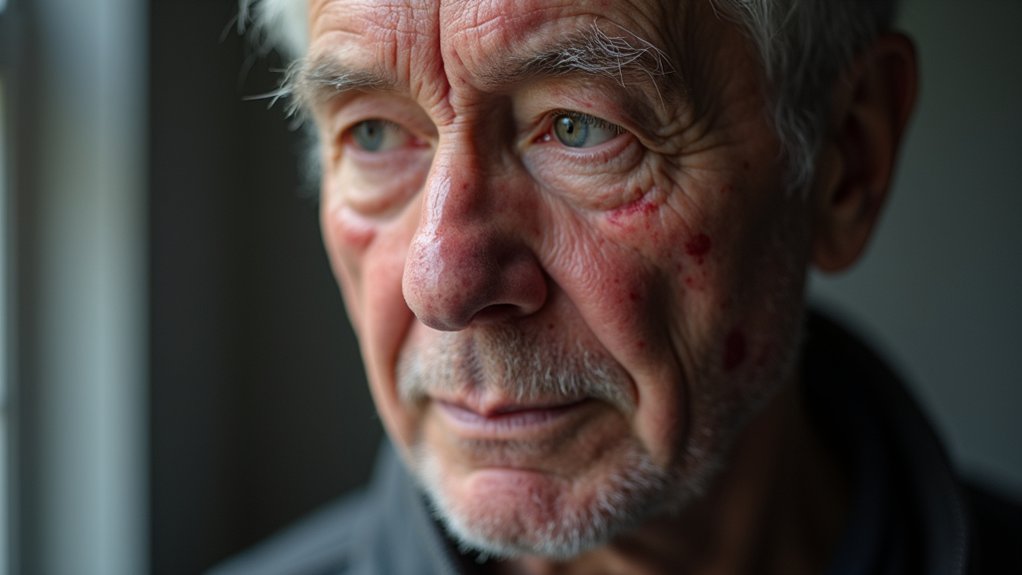
Chronic heavy drinking can cause visible changes to your face and skin, ranging from cosmetic to medically significant, although alcohol’s effects vary from person to person. What’s often called an alcoholic face typically includes flushing, persistent redness, and visible fine vessels as repeated dilation affects facial blood vessels. You may also notice dryness, under-eye puffiness, deeper lines, and cracks at the corners of your mouth linked to nutritional deficiencies. More serious alcoholism skin changes, including yellowing of your skin or eyes, widespread itching, and multiple spider-like vessels, can signal liver disease and warrant prompt medical evaluation. Still, no single finding confirms alcohol misuse. Facial signs of alcoholism overlap with rosacea, natural aging, smoking, and other health conditions, so you shouldn’t self-diagnose based on your appearance alone.
Why does alcohol cause facial redness and flushing
Alcohol causes facial redness and flushing because it dilates the blood vessels in your face, increasing blood flow near the skin’s surface and producing the temporary flushing many people notice. With repeated drinking, that dilation may contribute to persistent redness and visible fine vessels called telangiectasia, features often linked to alcoholic skin. If you have rosacea, alcohol can trigger or worsen flares, but it isn’t considered the cause in most people. One study of 175 patients and 145 controls found no significant difference in alcohol consumption. Spider angiomas, small red spots with radiating vessels, can also appear. Numerous lesions may signal alcohol-related cirrhosis, though isolated ones occur in healthy people. Alcoholic face swelling, such as under-eye puffiness, may accompany facial redness, yet neither sign alone confirms alcohol-related disease.
What causes alcoholic face swelling and puffiness

Researchers propose that alcohol’s inflammatory effects and repeated dilation of small blood vessels may affect facial tissue, which could contribute to the swelling and puffiness linked to heavy drinking. Skin-barrier disruption can compromise the skin’s structure, and alcohol’s diuretic action can also leave your skin dehydrated.
Heavy drinking can also change the contours of your face. Observational research links heavy alcohol use with under-eye puffiness, midface volume loss, and more pronounced lines. In one multinational survey of 3,267 women, heavy drinking, defined in that study as at least eight drinks per week, was independently associated with more severe visible aging. That finding shows association, not proof that alcohol alone caused the changes.
Your facial appearance also reflects age, genetics, smoking, nutrition, and health conditions, so you can’t attribute puffiness to alcohol without considering these factors.
How does drinking age and damage the skin
Heavy drinking ages and damages your skin through several overlapping pathways, and observational research links it with more visible aging. Researchers propose these mechanisms:
- Barrier disruption: Alcohol can alter skin permeability and lipid composition, weakening your skin’s protective layer.
- Dehydration: Its diuretic effect may contribute to dryness.
- Nutrient loss: Chronic use can impair absorption of essential fatty acids and vitamin A, slowing repair.
- Vascular changes: Repeated vessel dilation may leave persistent redness and fine visible vessels.
- Inflammation: Ongoing inflammation may accelerate visible damage.
A survey of 3,267 women independently linked heavy drinking and smoking with more severe facial lines, under-eye puffiness, and midface volume loss. Genetics, smoking, and nutrition also shape your appearance, though, so alcohol’s exact contribution remains difficult to isolate.
Can an alcoholic face reverse after quitting
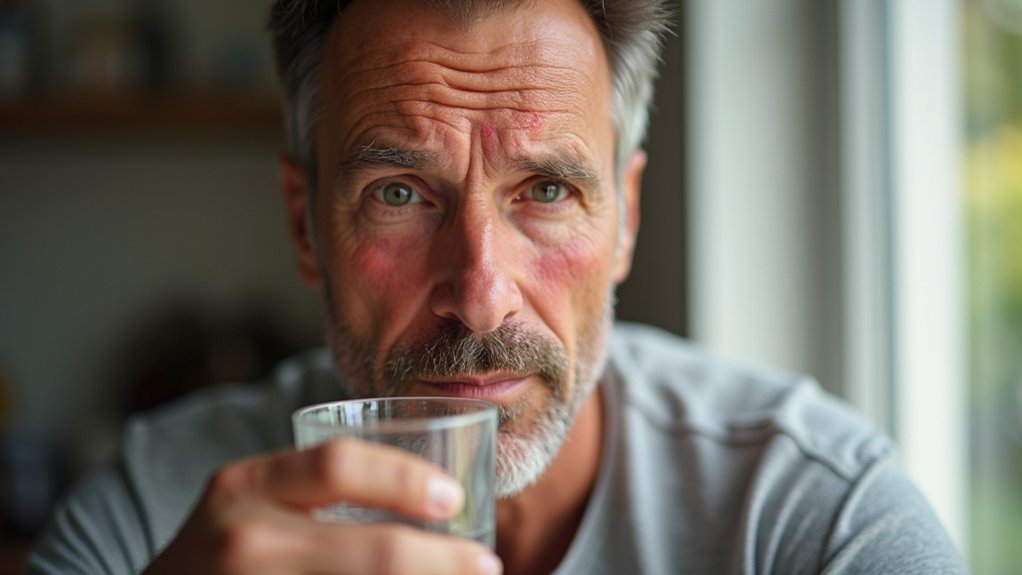
Yes, many alcohol-related facial and skin changes can improve after you stop drinking, but the extent depends on which changes you have and what’s driving them. Facial flushing may diminish after you quit, though persistent redness or rosacea often needs separate dermatologic management. If your skin changes stem from liver disease, recovery tracks with liver function. Jaundice may lessen as your liver improves, and spider angiomas may regress when the underlying condition resolves or after transplantation.
Don’t wait for changes to fade on their own. New yellowing of your skin or eyes, widespread itching, or multiple new spider-like vessels warrant prompt medical assessment for liver disease. Stopping alcohol prevents further harm, but if you’re dependent, quit under medical supervision, because withdrawal can be dangerous.
What facial signs of alcoholism appear
Heavy drinking can produce several facial signs, though none alone proves alcohol is the cause:
- Flushing and redness: Alcohol dilates facial blood vessels, and repeated dilation may leave persistent redness or fine visible vessels.
- Spider angiomas: Small red spots with radiating vessels can signal cirrhosis when they’re numerous.
- Jaundice: Yellow skin or eyes indicates bilirubin buildup from impaired liver function.
- Dryness and irritation: Dehydration and poor absorption of fatty acids and vitamin A can weaken your skin barrier.
- Visible aging: Observational studies link heavy drinking with more lines, under-eye puffiness, and midface volume loss.
Recognizing which changes you’re seeing helps you judge what might improve and what needs medical attention. If you notice yellowing, widespread itching, or multiple new spider-like vessels, seek prompt evaluation.
How does the face change from early to long-term drinking
Facial changes from drinking tend to progress from temporary effects to more persistent ones, though there are no fixed timelines for this progression.
| Stage | Possible changes | Key caveat |
|---|---|---|
| Early or occasional drinking | Temporary flushing from dilated vessels; dryness linked to dehydration | Flushing often fades once you stop drinking |
| Long-term heavy drinking | Persistent redness, visible fine vessels, lines, under-eye puffiness, midface volume loss, jaundice | Smoking, genetics, and age also contribute |
With repeated drinking, you may see redness that persists between episodes. Over time, observational research links heavy use with more visible facial aging, though it can’t prove alcohol alone causes it. Yellowing of your skin or eyes signals impaired liver function and needs prompt medical evaluation. Reducing or stopping alcohol can prevent further alcohol-related harm, and some changes may regress.
How does Villa Serena Recovery Center help reverse alcohol damage
Villa Serena Recovery Center helps reverse alcohol damage by providing medical support so you can stop drinking safely, prevent further harm, and give your body the chance to begin recovering. Because alcohol withdrawal can be dangerous, stopping under medical supervision rather than on your own is the first step in addressing alcohol-related skin damage. Recovery can improve changes such as:
Stopping alcohol under medical supervision is the safest first step toward preventing further harm and helping your skin begin to recover.
- Facial flushing, which may diminish after you stop drinking
- Jaundice, which may lessen as liver function improves
- Spider angiomas, which may regress if underlying liver disease resolves
- Dry skin linked to dehydration and impaired nutrient absorption
- Angular cheilitis associated with vitamin B deficiency
Recovery doesn’t reverse every change. Persistent redness or rosacea may need separate dermatologic management, and new yellowing, widespread itching, or multiple spider-like vessels require prompt liver evaluation.
Let Your Skin and Health Recover Together
Many of alcohol’s effects on your face fade once you stop drinking, but quitting safely is where real recovery begins. Villa Serena provides medical detox services with supervised care that lets your body heal while protecting you through withdrawal. Our admissions team is here 24/7 at +1 (844) 821-3984 to help you take the first step. Verify your insurance now and begin your path to lasting recovery.
Frequently Asked Questions
Does Alcohol Cause Rosacea, or Does It Only Trigger Flare-Ups?
Alcohol is not considered a cause of rosacea in most people, but it can trigger or worsen your flares. One study comparing 175 people with rosacea and 145 controls found no significant difference in alcohol consumption. Alcohol dilates your facial blood vessels, so you may notice flushing and, with repeated dilation, persistent redness or visible fine vessels. If you stop drinking, flushing may diminish, though rosacea itself may still need separate management.
Are Spider Angiomas Always a Sign of Liver Disease From Drinking?
No, spider angiomas aren’t always a sign of liver disease from drinking. You can develop an isolated spider angioma even if you’re healthy, so a single lesion doesn’t prove you’ve got liver disease. However, numerous spider angiomas can accompany alcohol-related cirrhosis, often alongside redness of your palms or jaundice. These skin findings can signal advanced disease, but they don’t establish alcohol as the cause on their own. If you notice multiple new lesions, see a clinician for a prompt liver assessment.
Why Does Liver Disease From Alcohol Cause Itchy Skin?
Alcohol-related liver disease causes itchy skin because a damaged liver can’t process and clear bile properly, so bile-associated substances build up in your body and trigger itching. You might also notice yellowing of your skin or eyes as bilirubin accumulates. Alcohol-related dryness and a weakened skin barrier can worsen irritation, though itching alone has many causes. Don’t self-diagnose. If you develop widespread itching or new yellowing, get prompt medical assessment for liver disease.
Can Vitamin Deficiencies From Drinking Cause Cracks at the Mouth Corners?
Yes, heavy drinking can cause vitamin B deficiencies that trigger angular cheilitis, which is cracking or inflammation at your mouth corners. Alcohol use disorder often coexists with poor nutrition and impaired nutrient absorption, which can weaken your skin’s integrity and slow healing. Still, these cracks aren’t specific to alcohol, and other causes exist. If they persist, don’t self-diagnose. Have a clinician assess you and identify the cause.
Does Alcohol Make Acne or Other Skin Conditions Worse?
Yes, alcohol can make acne and other skin conditions worse, mostly indirectly, since it doesn’t directly cause acne but can promote inflammation and dehydration that aggravate breakouts. If you have rosacea, drinking may trigger or intensify flares, even though it isn’t considered the cause for most people. Alcohol also dilates facial vessels, and repeated flushing may leave persistent redness. Chronic drinking can dry your skin and weaken its barrier by altering lipids and impairing vitamin A absorption, which can aggravate irritation and slow repair.