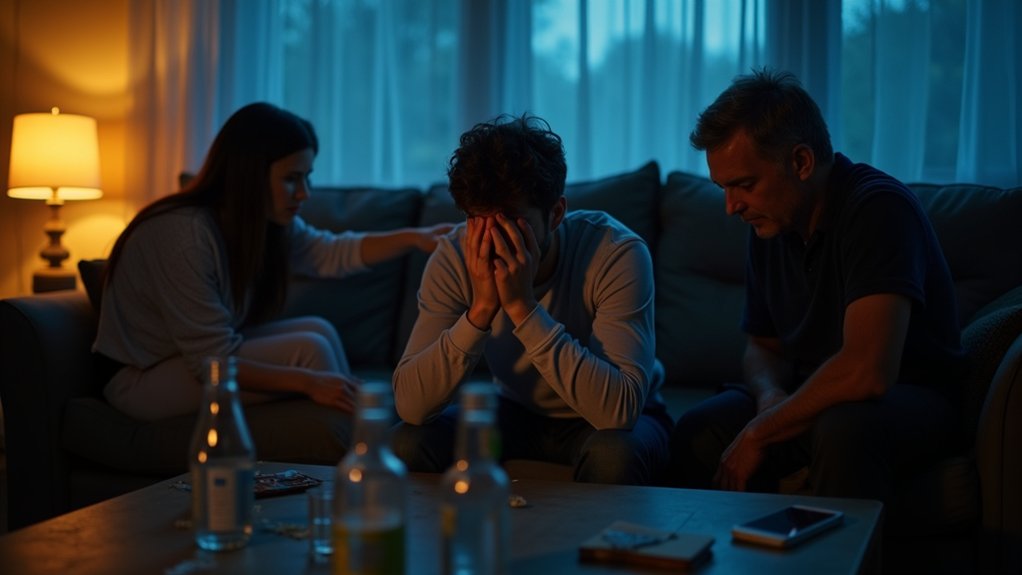
Yes, but their effects are modest. Brief counseling from your primary care provider can cut hazardous drinking by about 20 grams of alcohol weekly at one year. That’s meaningful, not a cure. For opioid addiction, you’ll get the best results when treatment includes medication like methadone, buprenorphine, or naltrexone, ideally with counseling. Detox alone isn’t enough. TV-style family confrontations don’t reliably work. Below, you’ll find what success looks like and how to raise your odds.
Key Takeaways
- Brief clinical counseling can reduce drug and alcohol use, but effects are modest and not a cure.
- Primary-care brief counseling cuts hazardous drinking by about 20 grams of alcohol weekly at one year.
- Benefits of brief alcohol interventions often fade over time without continued support.
- Planned family meetings meant to push someone into treatment lack reliable evidence of success.
- For opioid addiction, detox alone is insufficient; methadone, buprenorphine, or naltrexone with counseling is first-line treatment.
Do interventions work for drug and alcohol addiction

Some interventions work for drug and alcohol addiction, particularly brief clinical counseling and treatment that combines behavioral therapy, counseling, and medication. If you’re picturing a planned family meeting meant to push a loved one into treatment, there’s no reliable evidence on how often that approach succeeds, and it shouldn’t replace professional assessment or evidence-based care.
Brief clinical counseling and combined treatment can work, but staged family confrontations lack reliable evidence and shouldn’t replace professional, evidence-based care.
Do interventions work clinically? Yes. Brief counseling from a primary-care clinician, five sessions or fewer, cuts hazardous drinking by about 20 grams of alcohol weekly at one year. Modest, but meaningful.
Do drug interventions work? Treatment combining behavioral therapy, counseling, and medication can help you reduce or stop use and improve functioning. For opioid addiction, methadone, buprenorphine, or naltrexone is generally first-line. Detox alone isn’t enough.
Are interventions effective for everyone? Results vary by substance, setting, population, and outcome measured.
How often do interventions succeed
Interventions succeed modestly, and the rate depends on which intervention you mean and how you define success. If you’re asking about brief counseling from a primary-care clinician, 34 trials with 15,197 participants show it cuts drinking by about 20 grams weekly at one year, roughly 475 mL of beer. That’s a modest, measurable change, not a cure. Hospital-based brief interventions lowered consumption at six and nine months, though the difference faded by one year. If you’re picturing a family meeting, there’s no reliable success rate. The evidence doesn’t show these meetings consistently lead to treatment entry. Remember, drinking less isn’t the same as abstinence or lasting recovery. A successful intervention for you might mean reduced harm, a first appointment, or starting medication, so match your expectations to the goal.
Do the effects of an intervention hold up over time

Partly. Brief interventions can reduce drinking, but their effects tend to fade without continued support. If you receive brief counseling in primary care, research suggests you’ll likely drink about 20 grams less per week a year later, roughly 475 mL of beer. In hospital settings, the picture shifts over time:
- At six and nine months, intervention groups drank less than control groups.
- By one year, the consumption difference wasn’t clearly maintained, though self-reported reductions still favored intervention.
- Fewer deaths occurred in intervention groups at six months and one year, mostly among male participants.
Keep in mind that reduced drinking isn’t the same as abstinence or long-term recovery. If you’re facing a substance use disorder, ongoing treatment, including counseling or medication, can help you sustain change.
Why do some interventions fail
Some interventions fail because they don’t match the substance, the severity of use, or the outcome you’re hoping for.
Brief counseling can modestly reduce hazardous drinking, but you shouldn’t expect it to treat severe alcohol-use disorder or guarantee abstinence. If you’re relying on detox alone, you’re skipping the ongoing care recovery requires. For opioid addiction, leaving out medication such as methadone, buprenorphine, or naltrexone removes a first-line treatment.
Brief counseling helps hazardous drinking, detox alone isn’t recovery, and opioid treatment without medication skips a first-line option.
A family meeting can open a conversation, but it can’t replace professional assessment, and no reliable evidence shows it consistently leads to treatment entry.
Setting matters too. Results vary across settings and populations, and some studies underrepresent women. When you match the approach to your specific needs, you’ll likely improve your odds.
Does hiring a professional improve the odds

No, the available evidence doesn’t establish a reliable success rate for planned family or confrontational intervention meetings, whether or not a professional interventionist leads them. What the evidence does support is professional care itself. Here’s where clinicians make a measurable difference:
- Brief counseling in primary care cuts drinking by about 20 grams weekly at one year.
- Medications like methadone, buprenorphine, and naltrexone are first-line treatment for opioid addiction.
- Assessment determines whether you need behavioral therapy, medication, or both; detox alone isn’t enough.
If you organize a family meeting, treat it as a bridge to assessment, not a substitute for treatment. Your loved one’s best odds come from evidence-based care matched to their substance and needs.
What does a successful intervention look like
A successful intervention usually looks more modest than a dramatic turning point, and “success” depends on what you measure.
In primary care, brief counseling cut drinking by 20 grams a week at one year, roughly 475 mL of beer. That’s meaningful, but it isn’t abstinence or recovery. Hospital-based interventions lowered consumption at six and nine months, though the difference wasn’t clearly maintained at one year.
Define success clearly. Did your loved one drink less, enter treatment, start medication, or stay engaged? For opioid use disorder, success means starting methadone, buprenorphine, or naltrexone, ideally with counseling. Detox alone isn’t enough.
No reliable success rate exists for the family meeting format. If you’re planning one, treat it as a bridge to professional assessment, not the outcome.
Which factors raise the success rate
The factors that raise the success rate are matching the approach to the substance, the person, and the outcome you want, and relying on professional care. How forceful the conversation is matters less. Evidence doesn’t establish a reliable success rate for confrontational meetings.
| Factor | Why it helps |
|---|---|
| Brief clinical counseling | Modestly reduces hazardous drinking |
| Medication for opioid use | First-line; lowers return to use |
| Combined therapy and medication | Addresses cravings and triggers |
| Ongoing treatment after detox | Detox alone doesn’t sustain recovery |
Setting realistic goals also improves results. Cutting back isn’t the same as abstinence or long-term recovery, and longer counseling rarely adds much over brief sessions. If you’re worried about severe use, start with a professional assessment rather than a one-time family meeting.
How does Villa Serena Recovery Center improve intervention outcomes
Villa Serena Recovery Center’s effect on intervention outcomes depends on what happens after your loved one says yes, not on the intervention meeting itself. A family meeting can open a door, but it doesn’t replace professional assessment or evidence-based treatment, and no source reliably shows that one meeting causes treatment entry. In weighing Villa Serena Recovery Center, focus on the care that follows:
A family meeting can open a door, but real progress depends on professional assessment and evidence-based treatment that follows.
- Professional assessment that matches care to the specific substance, severity, and individual needs.
- Evidence-based treatment combining behavioral therapy, counseling, and medication when appropriate, such as methadone, buprenorphine, or naltrexone for opioid use disorder.
- Care beyond detox, since detoxification alone isn’t sufficient for recovery.
Ask how the team measures progress, too. Reduced use, abstinence, and long-term recovery are different outcomes. Clear goals help you judge whether treatment is truly working for you and your family.
Give Your Loved One Evidence-Based Odds
An intervention can open the door, but lasting change comes from professional care matched to the substance and the person. Villa Serena pairs intervention services with thorough assessment and evidence-based treatment that goes well beyond detox. Our admissions team is here 24/7 at +1 (844) 821-3984 to help you take the next step. Verify your insurance now and begin the path to lasting recovery.
Frequently Asked Questions
What Is the Difference Between a Family Intervention and Brief Clinical Counseling?
A family intervention is a planned meeting where loved ones encourage someone to seek treatment, while brief clinical counseling is short, clinician-delivered support, usually five sessions or fewer. Research shows brief counseling modestly reduces hazardous drinking, but there’s no reliable success rate for family meetings. If you’re considering either, don’t let a family meeting replace professional assessment. It can’t substitute for evidence-based care that matches your needs.
Which Medications Are Used to Treat Opioid or Alcohol Use Disorder?
Opioid use disorder is treated with methadone, buprenorphine, or naltrexone, and alcohol use disorder is treated with naltrexone, disulfiram, or acamprosate. For opioid use disorder, clinicians generally treat medication as first-line care. For alcohol use disorder, these medications can reduce cravings or make drinking less rewarding. You can combine medication with counseling or behavioral therapy to address triggers and stay engaged. Remember, detox alone isn’t enough, so work with a clinician to match treatment to your needs.
Is Detox Alone Enough to Recover From Substance Use Disorder?
No, detox alone isn’t enough to recover from substance use disorder. Detox can help you get through withdrawal safely, but you’ll likely need ongoing treatment to reduce use, prevent a return to use, and improve your daily functioning. Effective care may include behavioral therapy, counseling, medication, or a combination. If you’re dealing with opioid addiction, medications like methadone, buprenorphine, or naltrexone are generally first-line options you can combine with counseling.
Do Intervention Studies Apply Equally to Women and Other Underrepresented Populations?
Not necessarily, since the findings may not transfer equally. The hospital review of 14 studies enrolled 4,041 mostly male heavy drinkers, so its reported drops in drinking and deaths may not reflect your experience if you’re a woman or from another underrepresented group. Research from low- and middle-income countries also shows wide variation and low certainty. You’ll get the clearest guidance when a clinician matches evidence to your specific circumstances.
Is Cutting Back on Drinking the Same as Achieving Long-Term Recovery?
No, cutting back isn’t the same as long-term recovery. When you reduce your drinking, you’ve achieved a meaningful outcome. Brief counseling cuts consumption by about 20 grams weekly. But reduction differs from abstinence, treatment entry, or sustained recovery. If you’re facing severe alcohol-use disorder, you’ll likely benefit from fuller treatment, such as behavioral therapy or medications like naltrexone, acamprosate, or disulfiram. Your progress counts, and you deserve care matched to your needs.