
You’ll recognize alcoholism, clinically called alcohol use disorder, by lost control more than by how much someone drinks. Watch for drinking more or longer than intended, failing to cut back, and strong cravings. Needing more alcohol to feel the same effect signals tolerance. Shakiness, sweating, nausea, or restlessness as alcohol wears off points to withdrawal. You don’t need a diagnosis to act. Next, you’ll learn how heavy drinking differs and how to approach someone safely.
Key Takeaways
- Drinking more or longer than intended and repeatedly failing to cut back are core behavioral signs of alcoholism.
- Strong cravings and needing more alcohol to feel the same effect signal developing tolerance and dependence.
- Shakiness, sweating, nausea, racing heart, or trouble sleeping as alcohol wears off indicate withdrawal; seizures or hallucinations require urgent care.
- Alcoholism involves loss of control that harms health, relationships, or obligations, unlike heavy drinking, which is defined by amount consumed.
- Diagnosis requires a clinical evaluation, and quitting abruptly can be unsafe, so suggest a professional assessment.
What are the signs of alcoholism
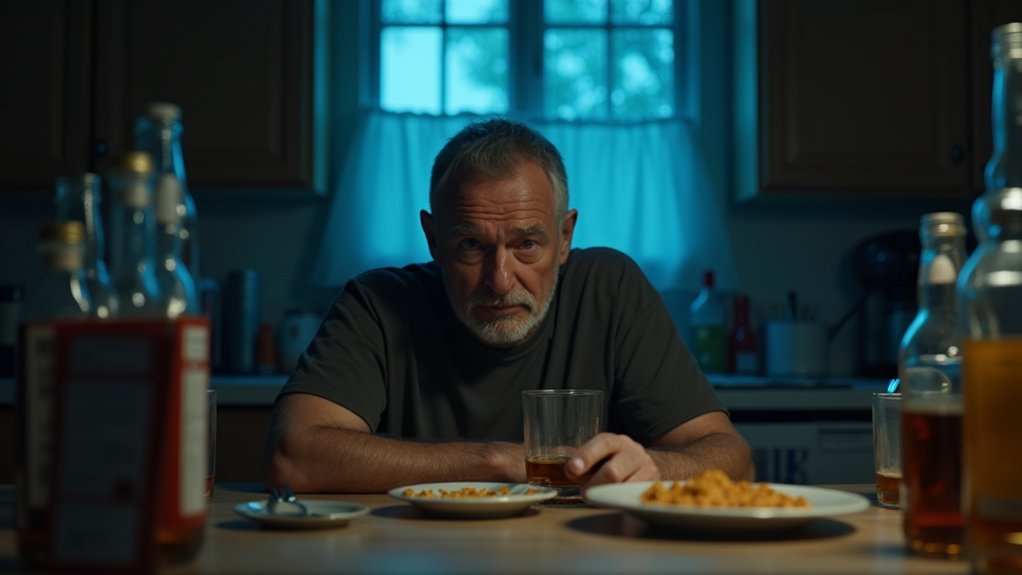
Signs of alcoholism include drinking more or longer than you intended, failing repeatedly to cut back, craving alcohol, needing more to feel the same effect, and feeling shaky, sweaty, nauseated, or restless as it wears off. Clinicians call the condition alcohol use disorder (AUD), and they assess it using 11 symptoms within a 12-month period.
Drinking can also crowd out your obligations, strain relationships, and push you toward risks like driving after drinking. If you keep drinking despite blackouts or worsening health, that’s a warning sign. Two or more symptoms meet the threshold for AUD, but only a clinical evaluation can confirm a diagnosis. Noticing these signs is a first step.
What behavioral signs point to a drinking problem
Behavioral signs of a drinking problem include drinking more or longer than you planned, or trying repeatedly to cut back without success. Drinking and recovering may take up more of your time, and you may feel strong cravings. These behavioral changes are usually the earliest and clearest signs, even though physical symptoms often get the most attention.
Watch how alcohol affects your responsibilities and relationships. You may miss work, school, or home obligations, keep drinking despite conflict with loved ones, or give up activities you once enjoyed. Risk-taking is another warning sign: drinking before driving, swimming, or operating machinery.
If you keep drinking despite blackouts or worsening health, it’s time to talk with a professional. These signs don’t confirm a diagnosis, but they do warrant an evaluation.
What physical signs of alcohol use disorder look like
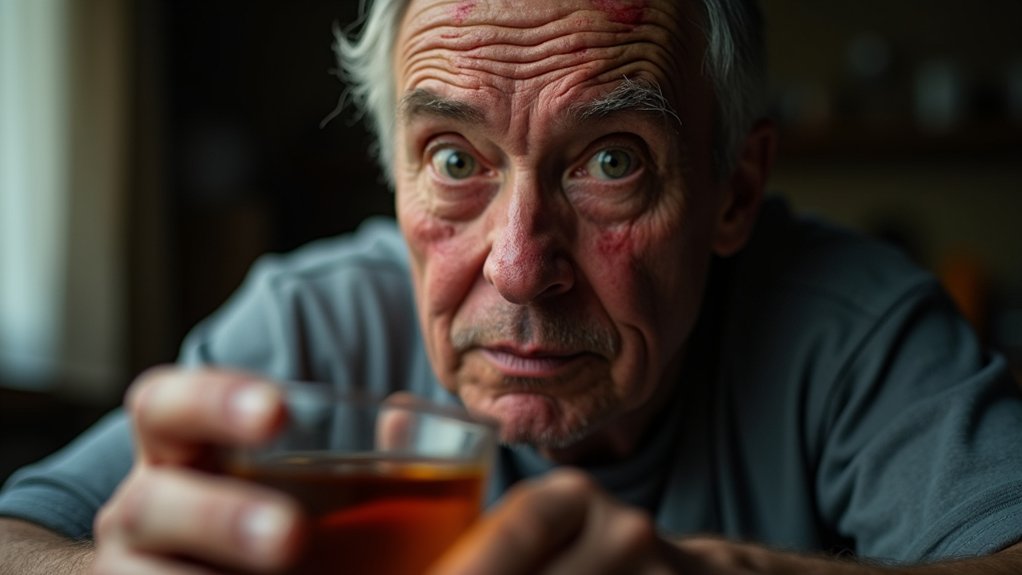
Physical signs of alcohol use disorder include shakiness, sweating, nausea, sleep problems, and a racing heart that appear as alcohol wears off. If you’ve been drinking heavily, your body may react when you cut back or stop. These withdrawal symptoms can begin 6–24 hours after your last drink, and they signal physical dependence.
Shakiness, sweating, nausea, or a racing heart 6–24 hours after your last drink can signal physical dependence on alcohol.
- Shakiness, restlessness, sweating, or nausea as alcohol leaves your system
- Sleep problems or a racing heart after you reduce or stop drinking
- Seizures or sensing things that aren’t there, which require urgent medical attention
- Anxiety or depression that worsens when you drink
Over time, excessive drinking can contribute to liver disease, heart disease, and some cancers. If you notice these signs, don’t try to quit abruptly alone. Talk with a healthcare provider, who can assess your symptoms and guide safe withdrawal.
How tolerance, cravings, and withdrawal signal dependence
Tolerance, cravings, and withdrawal signal dependence because they show that your body has adapted to regular heavy drinking, and they often develop together. Tolerance means you need more alcohol to feel the same effect. Cravings show up as strong urges that can make cutting back feel difficult, even when you’ve tried repeatedly. Withdrawal happens as alcohol wears off: you might notice shakiness, sweating, nausea, restlessness, a racing heart, or trouble sleeping.
These symptoms usually begin 6–24 hours after you stop or reduce drinking. In rare cases, withdrawal becomes life-threatening. If you experience seizures or sense things that aren’t there, seek emergency care immediately. If you drink heavily, see a clinician before quitting. They can help you withdraw safely and assess whether you meet criteria for alcohol use disorder.
How to tell heavy drinking from alcoholism

To tell heavy drinking from alcoholism, look at whether drinking affects your control, health, and daily life, not just how much you drink. Heavy drinking describes the amount you consume. Alcoholism, clinically called alcohol use disorder (AUD), describes how drinking affects your control, health, and daily life. You can drink heavily without meeting AUD criteria, but heavy drinking raises your risk of developing it.
| Factor | Heavy Drinking | Alcohol Use Disorder |
|---|---|---|
| Focus | Amount consumed | Loss of control and harm |
| Stopping | Usually possible when you choose | Repeated failed attempts to cut down |
| Physical signs | Hangovers | Tolerance, cravings, withdrawal symptoms |
Clinicians diagnose AUD when you show at least 2 of 11 symptoms within 12 months, regardless of how much you drink. Screening signs can’t confirm a diagnosis. If you’re questioning your drinking, a professional assessment can clarify where you stand and what support fits your needs.
How to approach someone you’re worried about
Approach someone whose drinking worries you by choosing a private moment when they’re sober and you’re both calm, then share specific behaviors you’ve noticed rather than labels like “alcoholic.” Describe concrete concerns, such as missed work, repeated failed attempts to cut back, or drinking before driving, and explain how they’ve affected you. Then listen without arguing, and expect denial or defensiveness.
Share specific behaviors you’ve noticed, not labels like “alcoholic,” then listen without arguing and expect some denial or defensiveness.
These steps can keep the conversation productive:
- Use “I” statements, like “I’m scared when you drive after drinking,” to reduce blame.
- Suggest a professional assessment, since only a clinician can diagnose alcohol use disorder.
- Warn against quitting abruptly. Withdrawal can begin within 6–24 hours and occasionally becomes life-threatening.
- Set clear boundaries and protect your own well-being, even if they’re not ready to change yet.
How Villa Serena treats alcohol use disorder
Villa Serena treats alcohol use disorder with a personalized plan that starts with a clinical evaluation, because the condition ranges from mild to severe and a one-size-fits-all approach doesn’t work.
Our clinicians review how many of the 11 DSM-5-TR symptoms you’ve experienced in the past 12 months, along with your physical and mental health. That assessment shapes the level of care you’ll need.
If you’re drinking heavily, stopping suddenly isn’t safe. Withdrawal symptoms can start within 6–24 hours, and seizures or hallucinations require urgent medical attention, so medical monitoring comes first when it’s needed.
Your plan addresses what’s driving your drinking, including co-occurring anxiety or depression. You’ll build skills to manage cravings, rebuild relationships, and return to the responsibilities alcohol disrupted. Recovery isn’t a straight line, and you won’t face it alone.
Recognize the Pattern and Reach Out for Support
Alcoholism rarely announces itself, it builds through patterns that are easy to dismiss until they add up. Villa Serena treats drug addiction treatment with care for your health, relationships, and daily life, built on a thorough clinical assessment. Our admissions team is here 24/7 at +1 (844) 821-3984 to help you take the next step. Verify your insurance now and begin your path to lasting recovery.
Frequently Asked Questions
Can an Online Self-Assessment Diagnose Alcohol Use Disorder?
No, an online self-assessment can’t diagnose alcohol use disorder. It can flag warning signs, like cravings, failed attempts to cut back, or drinking despite harm, and show you’d benefit from professional assessment. Only a qualified clinician can diagnose AUD, using DSM-5-TR criteria: at least 2 of 11 symptoms within 12 months. If your results concern you, talk with a healthcare provider promptly. You don’t have to figure this out alone.
Can Someone Have Alcohol Use Disorder Without Drinking Every Day?
Yes, you can have alcohol use disorder without drinking every day. Clinicians don’t diagnose AUD by frequency. They assess 11 symptoms within a 12-month period, and two or more meet the threshold. If you drink more than you intended, can’t cut down, crave alcohol, or keep drinking despite conflict, blackouts, or missed obligations, those patterns matter. A professional evaluation can clarify what you’re experiencing, then guide you toward appropriate support.
Is It Safe to Quit Drinking Suddenly Without Medical Supervision?
It isn’t always safe. If you drink heavily or regularly, stopping suddenly can trigger withdrawal within 6–24 hours: shakiness, sweating, nausea, racing heart, sleep problems, or anxiety. In rare cases, you could experience seizures or hallucinations, which can be life-threatening. Before you quit, talk with a healthcare provider who can assess your risk and guide a safer, supported plan. If you develop seizures or severe symptoms, seek emergency care immediately.
Does Alcohol Use Disorder Run in Families?
Yes, alcohol use disorder often runs in families. Research suggests genes account for roughly half of your risk, and your environment, including how your family drank, shapes the rest. A family history doesn’t mean you’ll develop AUD, but it does raise your odds. If relatives struggled, watch for early signs like cravings, rising tolerance, or failed attempts to cut back, and talk with a clinician who can assess you early.
Can Alcohol Use Disorder Be Cured, or Only Managed Long-Term?
Clinicians don’t usually call AUD cured, but you can reach lasting remission. They view it as a chronic, treatable condition, much like diabetes. You’ll benefit most from combining evidence-based options: medications such as naltrexone or acamprosate, behavioral therapies, and peer support. If you stop drinking after heavy use, you should seek medical supervision, since withdrawal can turn dangerous. Relapse doesn’t mean failure; it signals you need adjusted treatment, not shame.