
The core difference is where you stay. In residential rehab, you live at the facility, with continuous supervision, structured routines, and distance from everyday triggers. In outpatient rehab, you attend sessions at a clinic or through telehealth, then return home the same day. Outpatient care fits when your home is safe and you don’t need round-the-clock support. Neither option ranks higher, so your needs should guide the choice. Here’s how to tell which fits you.
Key Takeaways
- Residential rehab requires living at the facility, while outpatient rehab involves attending sessions and returning home the same day.
- Residential rehab provides continuous supervision and structured daily routines that reduce exposure to everyday triggers.
- Residential programs typically include individual and group counseling, medication support, and mutual-support meetings, with stays ranging from 30 days to over a year.
- Outpatient care suits people with a safe home environment, symptoms not needing round-the-clock supervision, and work, school, or caregiving responsibilities.
- Outpatient intensity varies: IOP provides at least 9 hours weekly and PHP at least 20, and individual needs should guide the choice.
What is the difference between residential and outpatient rehab
The core difference between residential and outpatient rehab is where you live during care. Both treat substance use disorders. In residential treatment, you stay at the facility, where staff provide continuous supervision, structured daily routines, counseling, and medication support away from many everyday triggers. In outpatient care, you attend sessions at a clinic, community setting, or through telehealth, then return home the same day.
Outpatient isn’t one uniform option. Standard visits are less intensive, while intensive outpatient programs offer at least 9 hours weekly and partial hospitalization provides at least 20. Comparing outpatient vs residential care means considering cost, work, and family responsibilities. Choosing residential or outpatient treatment should reflect your symptoms, health needs, and recovery environment.
What exactly is residential rehab
Residential rehab is a live-in form of substance use disorder treatment where you stay at the facility for the duration of your program. Staff and peers surround you in a structured environment that separates you from many everyday triggers. Compared with outpatient treatment, live-in care typically offers:
Residential rehab lets you live at the facility, surrounded by staff and peers in a structured setting that keeps everyday triggers at a distance.
- Continuous supervision and support from clinical staff
- Individual and group counseling, plus medication support when you need it
- Daily routines that build structure and steady your recovery
- Stays lasting 30 days or less, or longer programs that can exceed a year
Residential care often fits if you’ve struggled with lower-intensity treatment, need close monitoring, or lack a stable, safe home. Many programs also coordinate discharge referrals so you don’t lose momentum afterward.
How does residential differ from hospital inpatient care
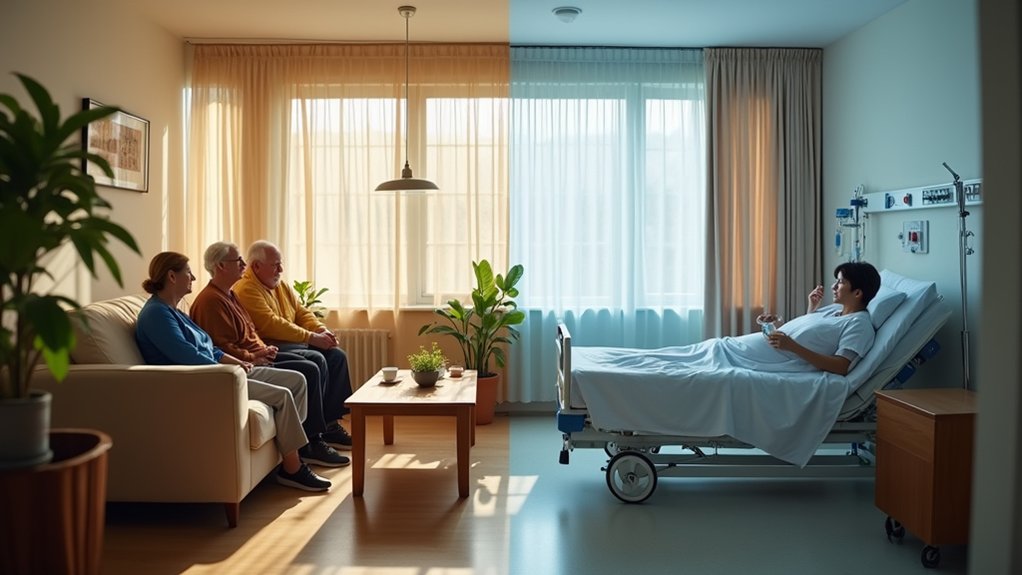
Hospital inpatient care focuses on medical stabilization, while residential rehab focuses on recovery, though both involve staying overnight. In a hospital, you’d receive round-the-clock physician and nursing oversight, often for complicated withdrawal, serious health conditions, or psychiatric crises. Stays are usually brief and end once you’re medically stable.
In residential rehab, you live at the facility in a structured, supervised environment, but the emphasis shifts from acute medical treatment to individual and group counseling, medication support, and daily routines that build coping skills. Stays commonly last weeks to a few months.
You can move between these levels as your needs change. You might start with hospital-based stabilization, then step down to residential care. Your symptoms, health needs, and recovery environment should guide which setting fits you best.
What does a day in the program look like
A day in residential rehab follows a structured routine that keeps you engaged in treatment from morning to evening. Because you live on-site, staff and peers are available throughout, and the setting separates you from many everyday triggers. Your schedule typically includes:
- Individual counseling to address your specific symptoms and goals
- Group counseling, where you’ll build coping skills alongside peers
- Medication support, if it’s part of your care plan
- Access to mutual-support meetings that reinforce recovery
This daily structure provides more consistency than outpatient care, where you’d attend sessions and return home the same day. Continuous supervision also means you’re never managing difficult early moments alone. As discharge approaches, many programs coordinate referrals to continuing care so your hard-won progress carries forward afterward.
Who benefits most from this level of care
Residential care benefits people with severe substance use disorders or those for whom lower-intensity treatment hasn’t worked, since it offers structure and close monitoring. Your living situation matters too. Unstable housing, limited family support, or an environment that threatens your recovery can make a live-in setting the safer choice, since it separates treatment from many everyday triggers.
Outpatient care may suit you better if you have stable housing and people who support your recovery. Its flexible scheduling lets you keep working or meet other responsibilities. If you need more help than weekly visits provide, IOP or PHP can add hours without requiring you to live on-site.
No single option fits everyone. Your care level should reflect your symptoms, functional challenges, health needs, and recovery environment.
When does outpatient care make more sense
Outpatient care makes more sense when your home is a safe place to recover and your symptoms don’t require round-the-clock supervision. Stable housing and supportive relationships make community-based treatment more workable, and flexible scheduling lets you keep up with work, school, or caregiving. It’s also generally less costly than residential care.
Outpatient care may fit you if:
- Your environment supports recovery: You have stable housing and people who encourage your progress.
- You need to keep daily responsibilities: You return home after sessions, so your routine stays largely intact.
- You want more structure without living on-site: IOP typically offers at least 9 weekly hours, and PHP offers at least 20.
- You’re stepping down from residential care: Continuing outpatient treatment helps you sustain recovery after discharge.
Your care level should match your symptoms, health needs, and circumstances.
How do residential, inpatient, and outpatient treatment compare
Residential, inpatient, and outpatient treatment all address substance use disorders, but they differ mainly in where you stay during treatment and how many hours of structured support you receive.
| Level of care | What you can expect |
|---|---|
| Residential | You live at the facility, with continuous supervision, counseling, and medication support for weeks to months. |
| Inpatient | You stay in a medically managed setting for close monitoring when health needs are complex. |
| Outpatient | You return home after sessions; intensity ranges from standard visits to IOP (9+ hours weekly) and PHP (20+ hours weekly). |
Outpatient costs less and preserves your routine, while live-in settings remove you from triggers. Research doesn’t support a simple ranking; intensive outpatient and residential treatment sometimes show similar outcomes. Your needs should guide your choice.
What does residential care at Villa Serena Recovery Center involve
Residential care at Villa Serena Recovery Center involves living on-site in a structured, supervised environment that separates treatment from many everyday triggers. Staff and peers are available around the clock, and daily routines give your recovery a steady framework. Residential care may fit if you’re facing a severe substance use disorder, haven’t succeeded with lower-intensity treatment, or need close monitoring.
- Individual and group counseling: You’ll work through challenges one-on-one and alongside peers.
- Medication support: You can receive medication-related care as part of your treatment plan.
- Mutual-support access: You’ll connect with recovery communities that extend beyond the program.
- Continuing-care referrals: Your team can coordinate outpatient or aftercare services before discharge.
Because treatment is a continuum, you can step down to less intensive care as your needs change.
Choose the Setting That Protects Your Recovery
Whether you need the structure of living on-site or the flexibility to heal at home, the right choice depends on your symptoms, support system, and environment, not a one-size-fits-all rule. Villa Serena provides residential treatment in a safe, supervised setting designed to keep everyday triggers at a distance. Our admissions team is here 24/7 at +1 (844) 821-3984 to help you find the right fit. Verify your insurance now and begin your path to lasting recovery.
Frequently Asked Questions
Can I Keep Working While Attending an Outpatient Rehab Program?
Yes, you can often keep working during outpatient rehab. You’ll attend sessions, then return home the same day, and flexible scheduling can help you manage employment. Your time commitment depends on intensity: standard visits require fewer hours, while intensive outpatient programs involve at least 9 hours weekly and partial hospitalization at least 20. Your clinician should match your care level to your symptoms, support, and recovery environment, so treatment fits you.
Does Insurance Usually Cover Residential or Outpatient Addiction Treatment?
Yes, most health insurance plans cover both residential and outpatient addiction treatment, though specific benefits vary by plan. Call your insurer and ask which levels of care, including residential, standard outpatient, IOP, and PHP, your plan covers. NIDA notes outpatient treatment generally costs less than residential care, which may lower your expenses. Ask about prior authorization requirements, since your care level should reflect your symptoms, health needs, and recovery environment.
Can I Switch From Outpatient to Residential Care if Needed?
Yes, you can switch from outpatient to residential care if needed. Treatment works as a continuum, so your care team can increase intensity if your needs change. If symptoms worsen, outpatient care isn’t helping, you need closer monitoring, or your home environment feels unsafe, residential care may fit better. Your clinicians should base placement on your symptoms, health needs, functioning, and recovery environment. Later, you can step back down to outpatient services when you’re ready.
What Kind of Aftercare Is Recommended After Leaving Residential Rehab?
Continuing outpatient or aftercare services that support your recovery are recommended after residential rehab. Many people step down to a partial hospitalization program, an intensive outpatient program, or standard counseling, depending on clinical need. Your program may arrange discharge referrals. Individual or group counseling, medication support, and mutual-support groups can strengthen your progress. Because care is a continuum, you and your team can adjust intensity as your needs change.
Can Family Members Be Involved During Residential or Outpatient Treatment?
Yes, family members can often be involved during both residential and outpatient treatment, though the specifics vary by program, so ask each provider directly. Evidence-based placement guidance treats family support as a meaningful factor. If you have stable housing and supportive relatives, outpatient care may work well because you return home daily. If family support is limited or your home feels unsafe for recovery, a residential setting may better protect your early progress.